Available for work

Designing a smart, guided socialization system for first-time puppy owners.

Role

UX Research and Product Design

Timeline

8 months

Project

Academic

Tools

Figma, Framer, Miro, Illustrator, Notion

What I did

Research, Synthesis, IA, UI Design, Prototyping, Usability Testing, Market Validation

The 5 minute version.

In urban India, 7 of every 100 pet dogs are abandoned annually, and 30% of rescued dogs show preventable behavioral issues such as fear, aggression, and reactivity that trace back to one missed window: the puppy socialization period between 3 and 16 weeks of age.

First-time owners, 90% of Indian pet parents, do not fail at socialization because they do not care. They fail because they hesitate. Stray dogs, dog-bite headlines (3.05M reported cases in 2023), inhospitable public spaces, and no way to read what their puppy is actually feeling combine into a single outcome: missed exposure during the only window that matters.

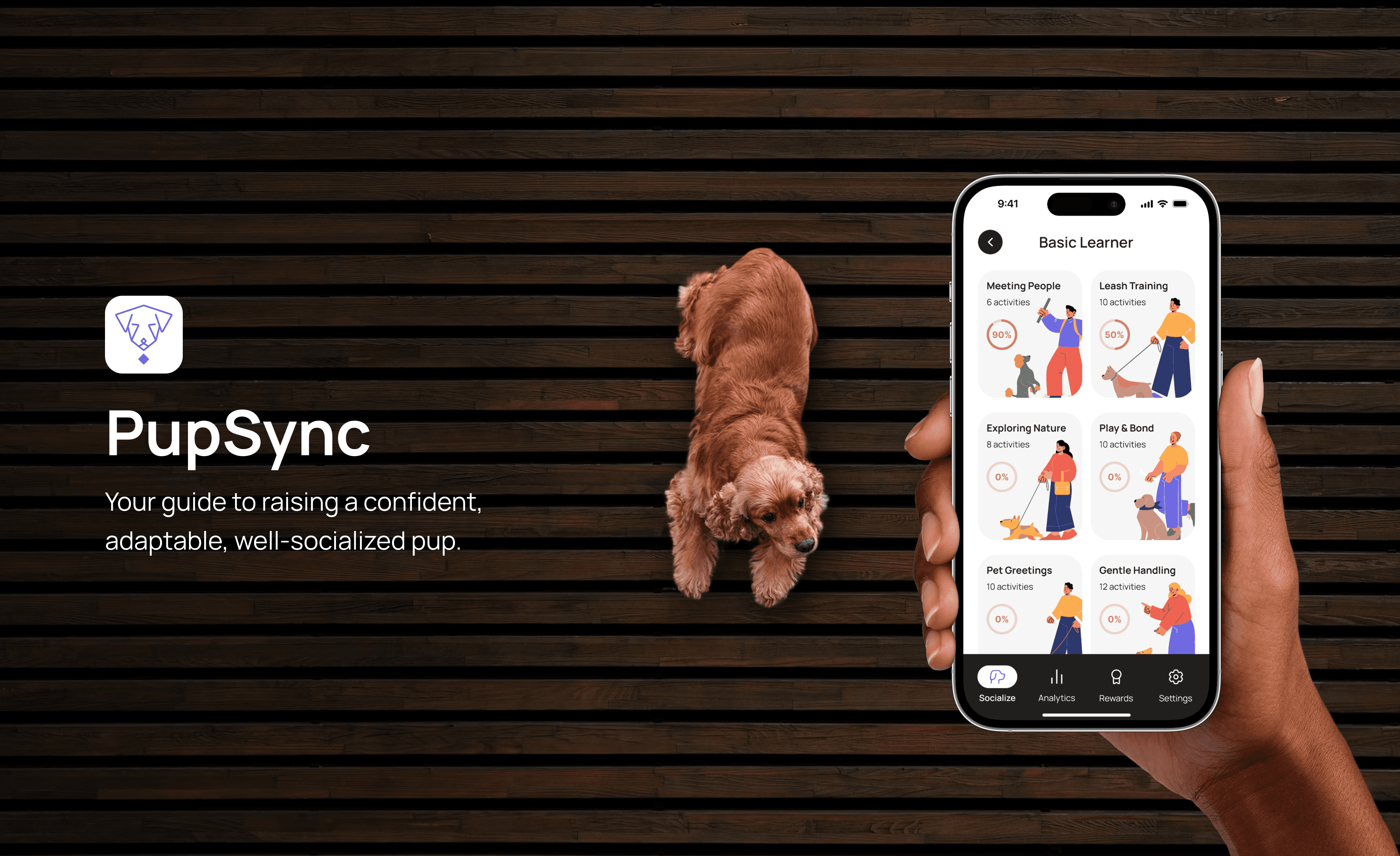
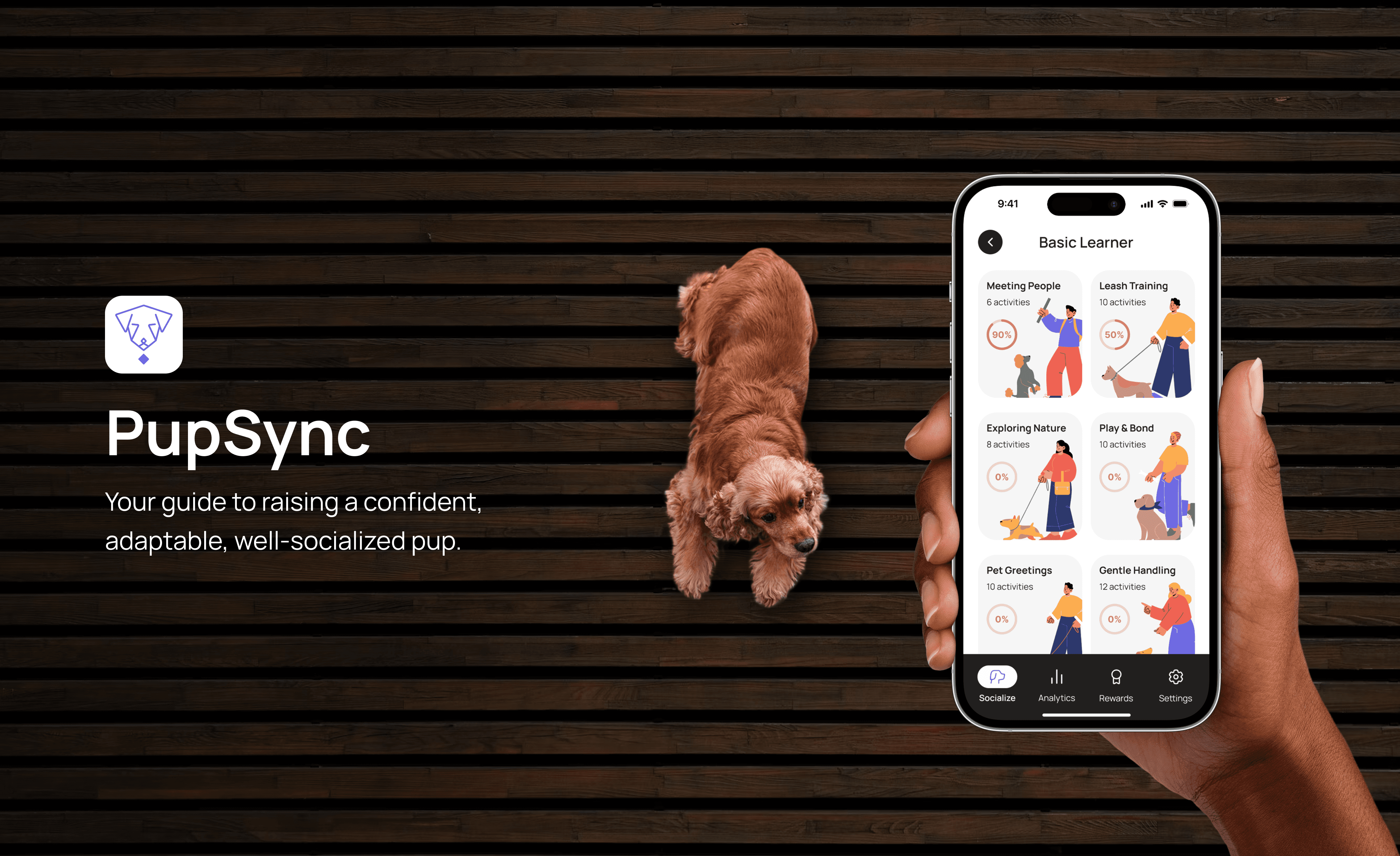
PupSync is a mobile app paired with a smart harness that reads a puppy's heart-rate variability, translates it into emotional state (calm, stressed, excited), and delivers in-the-moment guidance during structured socialization activities. It transforms a period of fear and guesswork into a period of competence and consistency.

85.2%

Average task success in usability testing

(5 participants, 7 tasks)

12.1%

Landing page sign-up rate validating real user demand for the solution

Context

India is the world's largest emerging pet market. But the country also accounts for nearly 70% of the world's human rabies cases, creating a culture of fear around dogs in public spaces, even as more families bring puppies home for the first time.

2014

12.58M

Pet dogs in India a decade ago

2028 • PROJECTED

51.53M

More than 4× growth in 14 years

TODAY

70M

Stray dogs roaming Indian streets

The hidden root cause: behavior, not breed

FINDING 01

+50%

Rise in urban pet abandonment cases over five years.

2019 SURVEY

FINDING 02

30%

Of abandoned pedigree dogs showed preventable behavioral issues.

WELFARE OF STRAY DOGS

FINDING 03

Leading cause

Fear, anxiety, aggression, reactivity, why owners give up their pets.

CROSS-SOURCE SYNTHESIS

Veterinarians and animal welfare experts trace most of these issues back to one place: inadequate socialization during the critical period of 3 to 16 weeks, when a puppy's brain is forming lifelong associations with people, sounds, environments, and other animals.

Primary Research

A combined qualitative and quantitative study across multiple research channels to understand how first-time puppy owners navigate the early weeks and where the system breaks down.

METHOD

SAMPLE

PURPOSE

Screener survey

User interviews

Stakeholder interviews

41 respondents

12 dog owners

3 dog trainers & behaviorists

Qualify participants and quantify attitudes

Capture lived socialization experiences

Validate findings with professional perspective

Recruitment Criteria

INCLUDED

Recent adopters and former first-time owners who personally navigated the first 0–4 months of puppy ownership. This kept lived experience central and within the critical socialization window.

EXCLUDED

Owners who only adopted adult dogs. This would skip the 3–16 week developmental window, making their experiences less relevant to early-stage socialization insights.

Recruitment Channels

Facebook Dog-owner Groups

Dog Parks

Referrals

Survey Signal

OUT OF 41 RESPONSES

FINDING

COUNT

Were "very concerned" about socializing during early weeks

22/41

Consider socialization "very important"

23/41

Reported socialization opportunities as inaccessible

25/41

INSIGHT
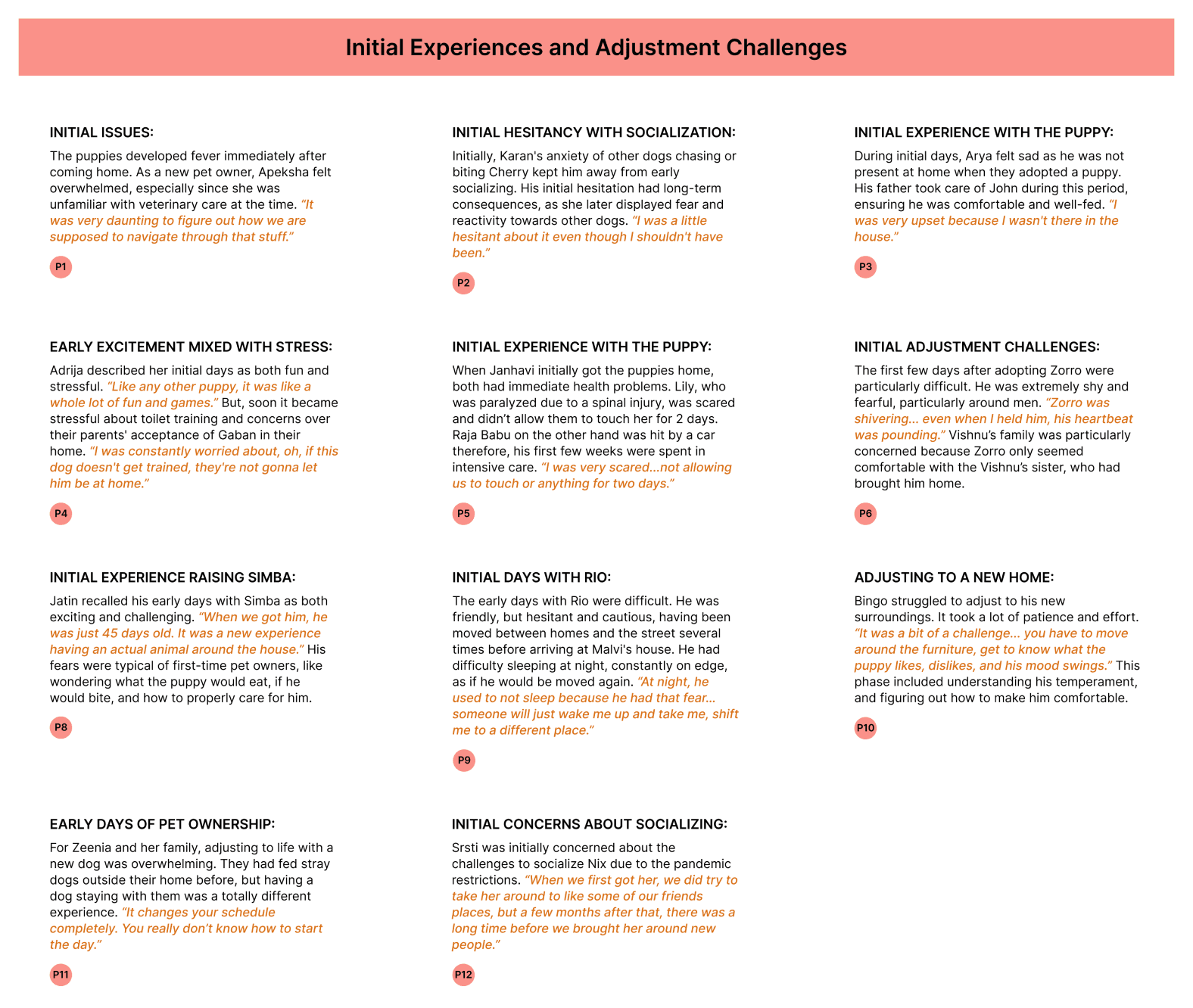
A clear majority of owners understand socialization is important. They just can't actually do it.

Awareness wasn’t the problem, access was. The gap between intent and action defined the design opportunity, shifting the focus from education to execution support.

Synthesis

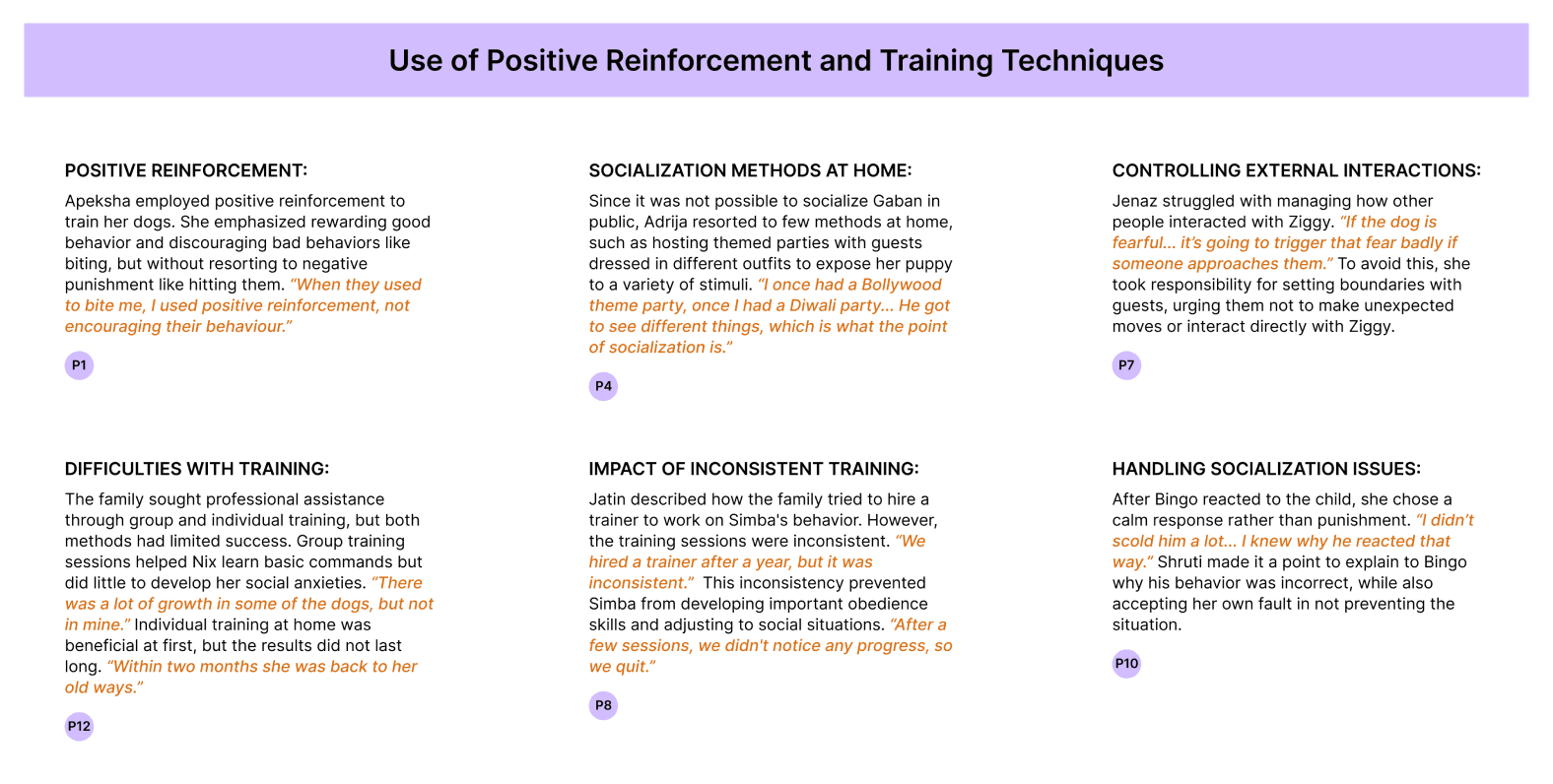
Five sequential synthesis methods, each narrowing the problem space from raw interview transcripts to a clear, actionable problem statement.

Interview Debriefs

PARTICIPANT

Karan

PET

Cherry

Lhasa Apso

ADOPTION

First-time owner

STATUS

Behavioral issues observed

INTERVIEW 04

“I was a little hesitant about it even though I shouldn't have been... We didn't try an app or books, nor did we consult any dog experts... Whenever we go and pet another dog, Cherry gets jealous and starts barking.”

Karan, on raising Cherry

Karan’s Experience - Synthesized

Early hesitation

Limited social exposure

Reactive behavior

Reduced owner confidence

Affinity Mapping

Five sequential synthesis methods were used to narrow the problem space from raw interview transcripts to a clear, actionable problem statement.

User Journey

The end-to-end experience was mapped across five stages: Pre-adoption & Adoption → Early Weeks of Adjustment → Initial Socialization Attempts → Behavioral Adaptation → Reflection.

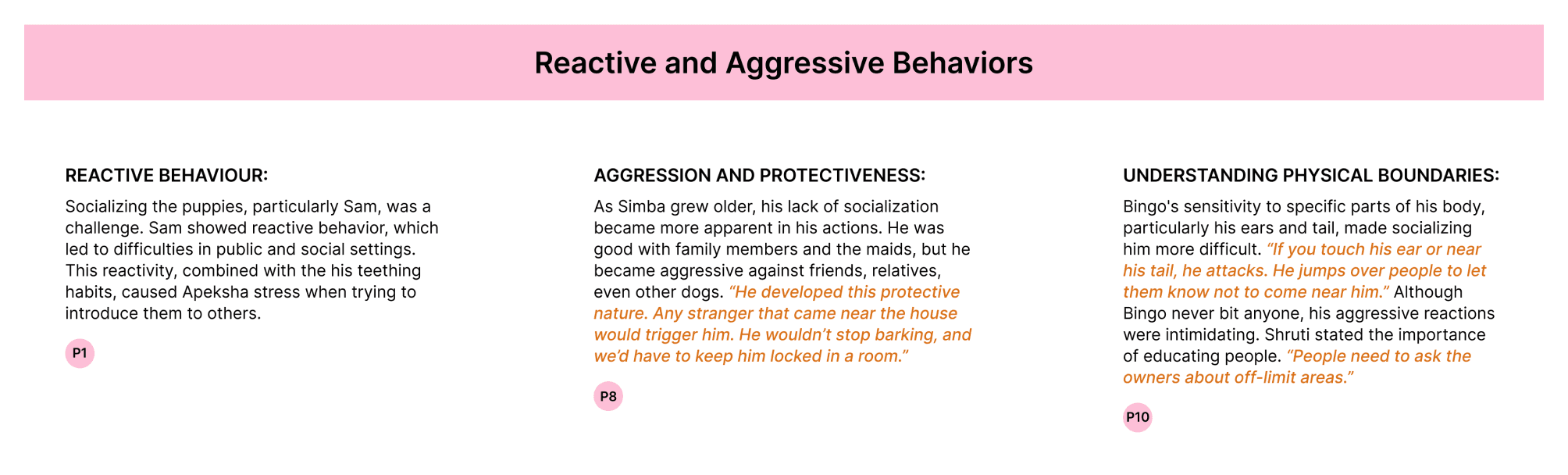
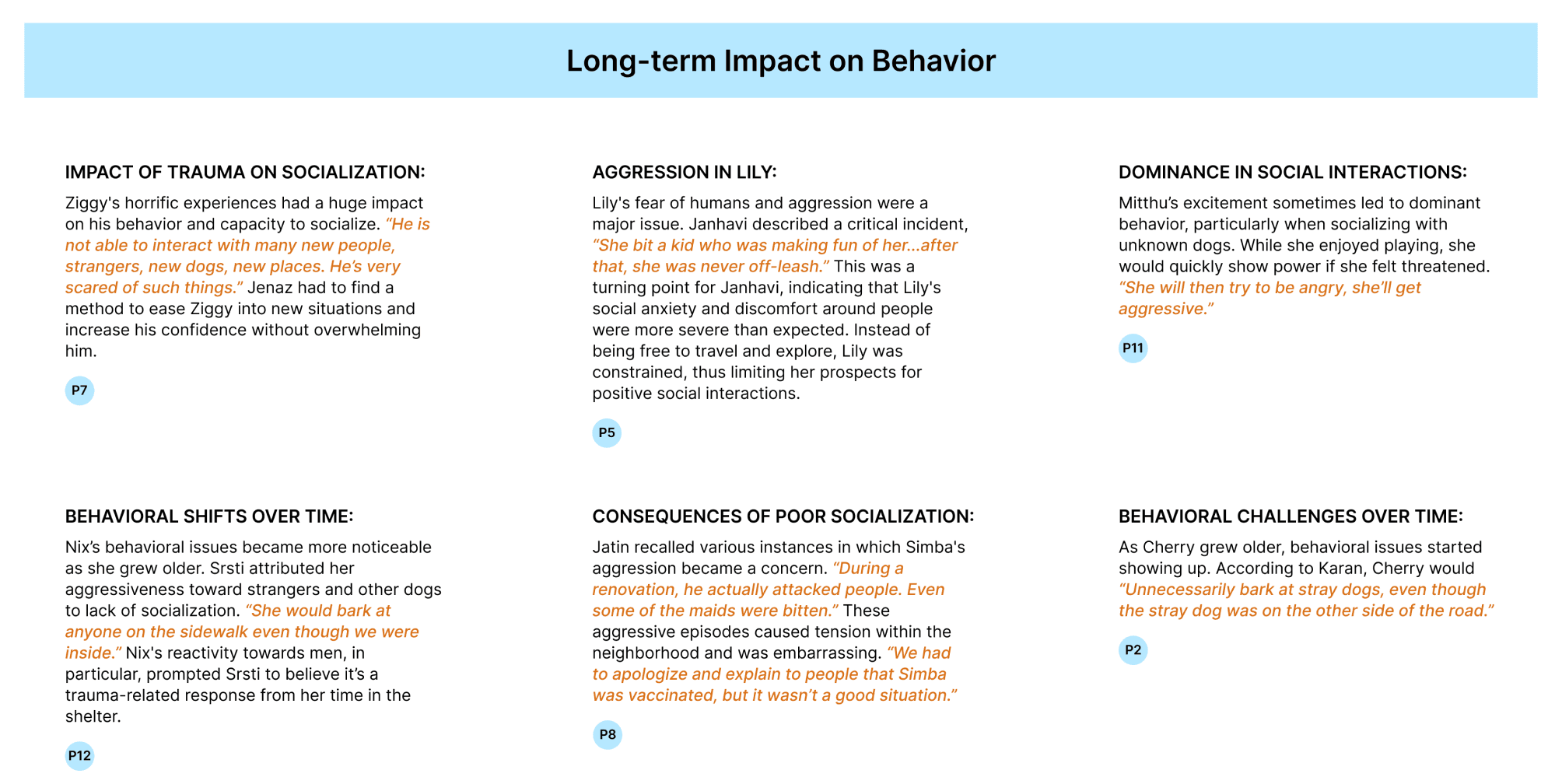
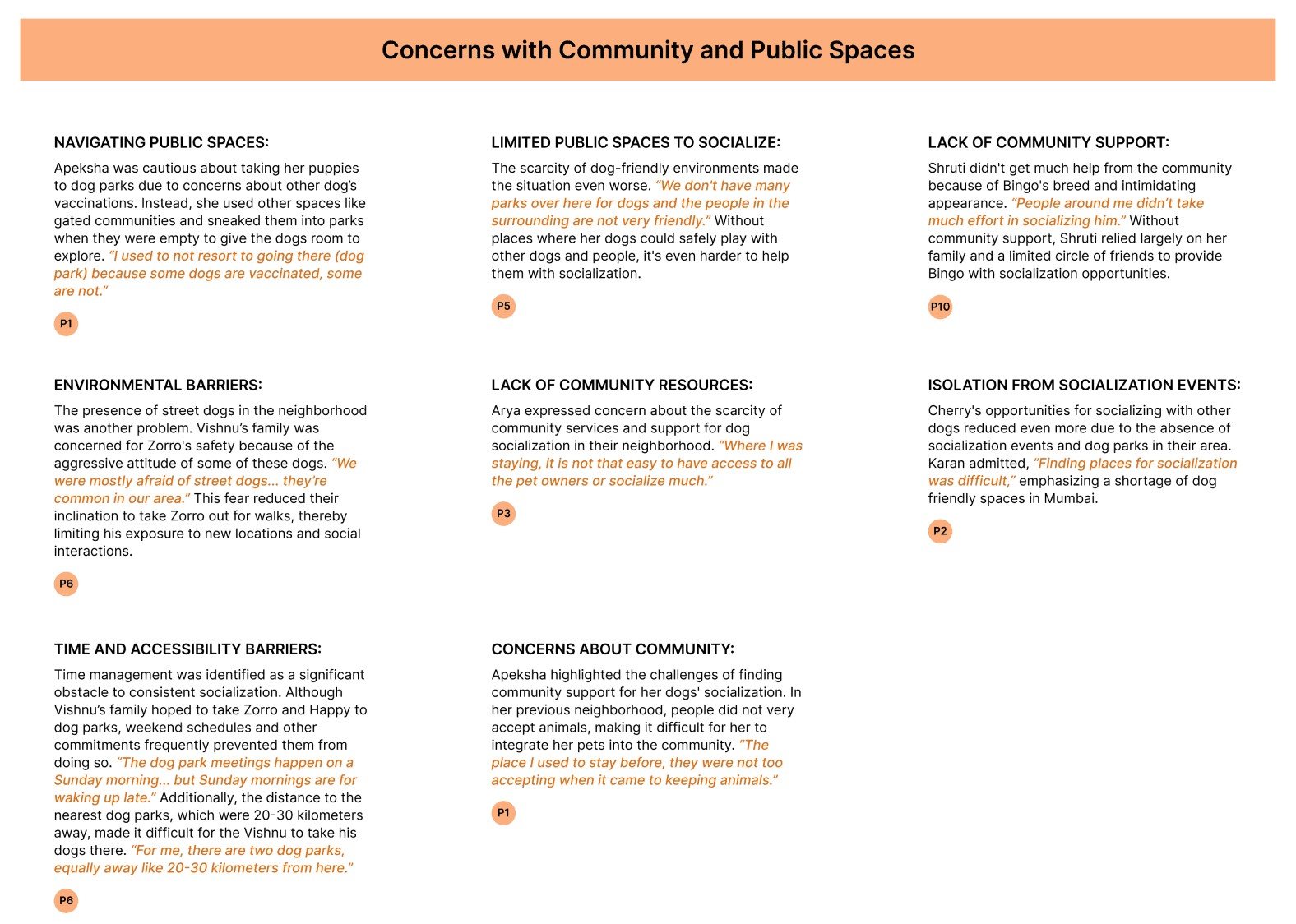
The rest of the project focused on the third stage, where most participants reported their biggest struggles. Limited access to pet-friendly spaces, fear of negative encounters, lack of a supportive community, and an inability to read their puppy's comfort levels combined into one common outcome: delayed, inconsistent, or skipped exposure during the period that mattered most.

Quantitative Analysis

Each of the 12 participants was tagged across five challenge categories within the Initial Socialization Attempts stage, helping identify which problem prioritize.

CHALLENGE

AFFECTED

Early Hesitation

9/12

Limited Access to Spaces

8/12

Lack of Supportive Network

7/12

Safety Concerns

5/12

Reactions from Strangers

5/12

Root Cause Analysis

Across participants, hesitation consistently traced back to three factors: not knowing how the puppy was feeling, fearing unsafe environments, and lacking guidance suited to real-world conditions. This combination prevented consistent action during the critical socialization period.

This revealed an opportunity to support owners in taking confident, timely action during early socialization.

How might we reduce dog abandonment caused by behavioral problems in India by helping first-time puppy owners confidently socialize their puppies during the critical socialization period?

Who is the user?

How are we solving?

What are we solving?

PROBLEM STATEMENT

Solution

PupSync is a mobile app that guides first-time puppy owners through tailored socialization activities, turning biometric data from a paired smart harness into clear emotional states and contextual recommendations during real-world moments.

WHAT I DESIGNED

The mobile app experience

End-to-end: onboarding, activity flows, real-time guidance UI, post-activity reflection, analytics, rewards, and the AI recommendation interface.

EXTERNAL INTEGRATION

Smart harness

- Hardware by Inupathy

A smart harness for dogs that captures heart-rate variability data, integrated into PupSync as a biometric input source for real-time emotional interpretation.

INPUT - BIOMETRIC SIGNAL

A puppy’s heart-rate variability changes in response to stress, calm, or excitement.

SENSOR - EXTERNAL HARDWARE

Third-party Inupathy harness reads HRV through a chest-worn sensor.

OUTPUT - OWNER’S ACTION

Adjusts behavior in the moment, pausing, redirecting, or progressing as needed.

APP LAYER - PUPSYNC

Translates HRV into emotional states like calm, stressed, and excited, then surfaces an adaptive recommendation.

Storyboard

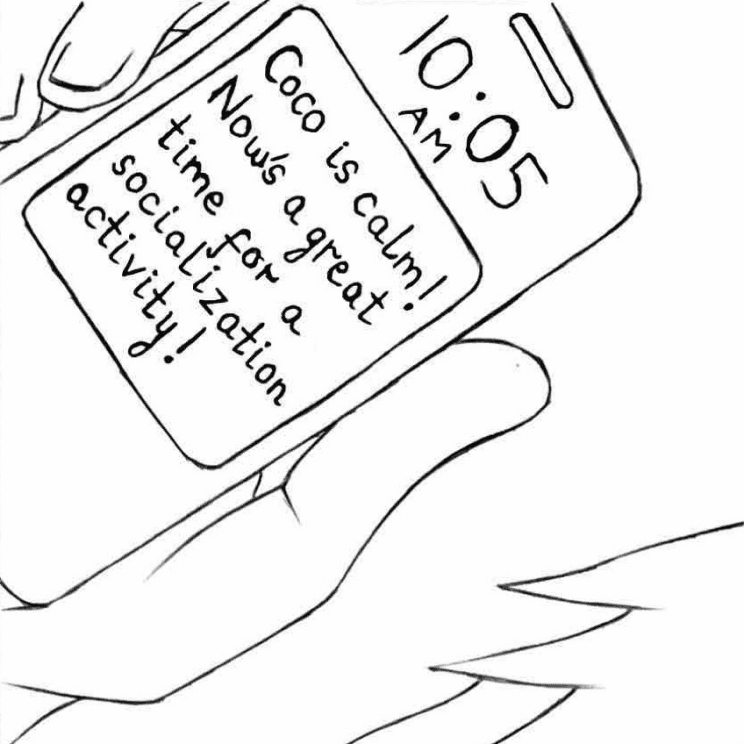
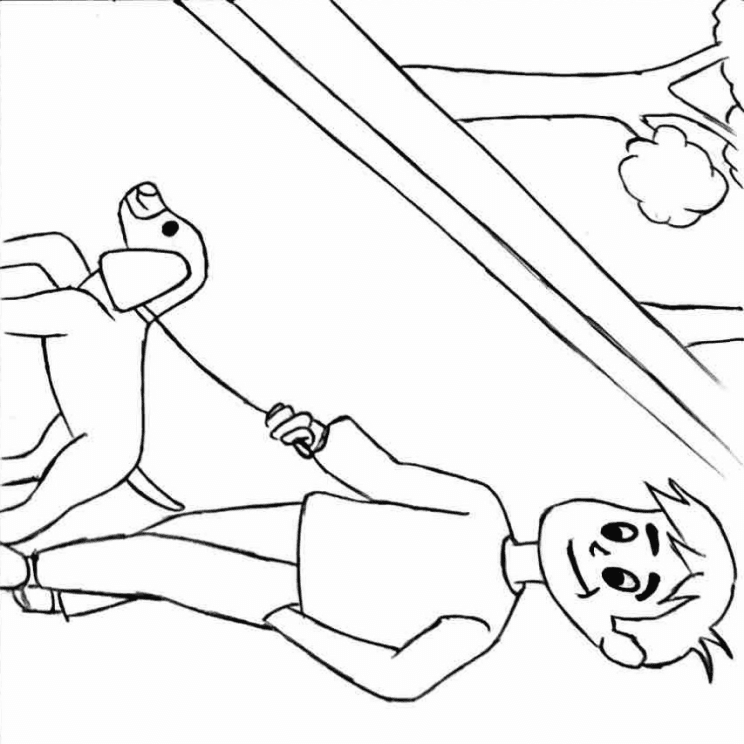
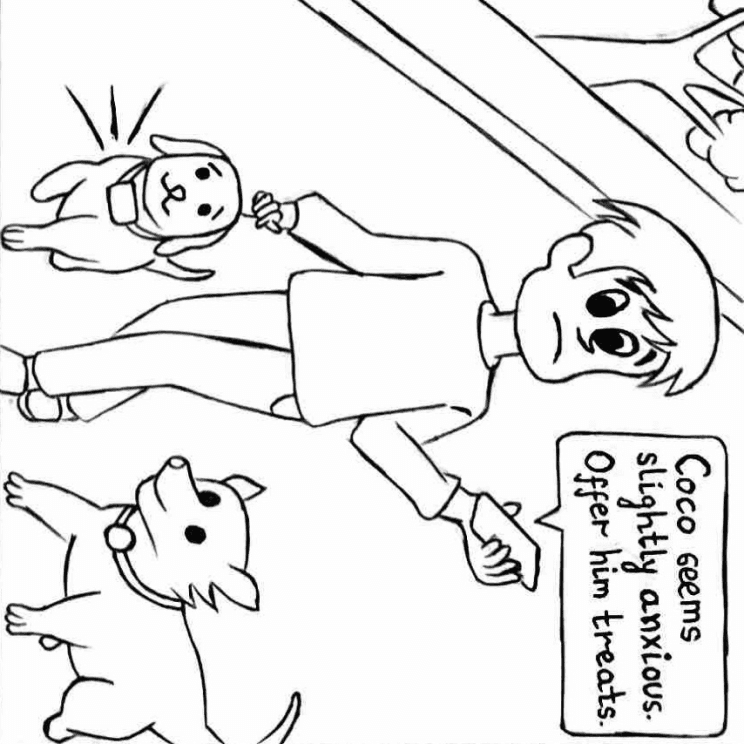
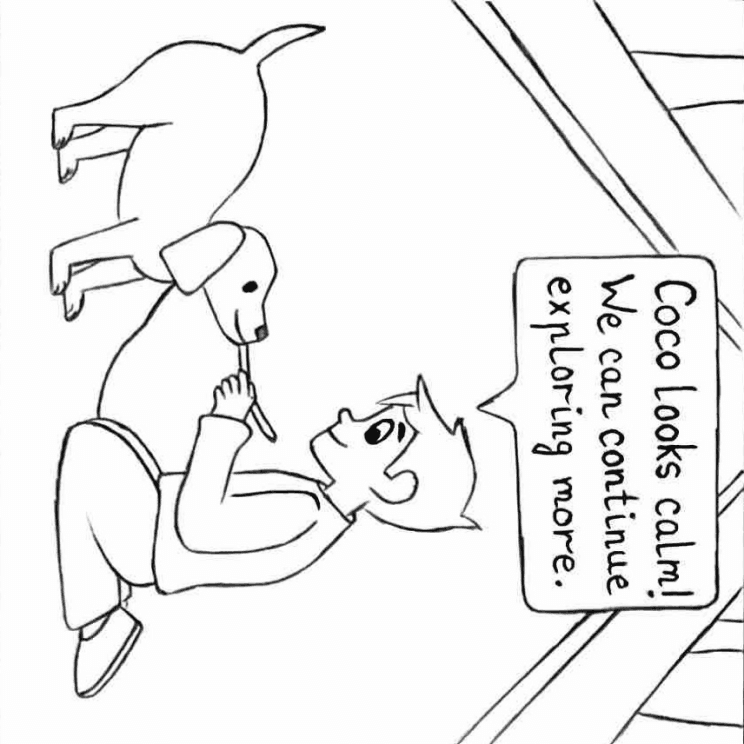
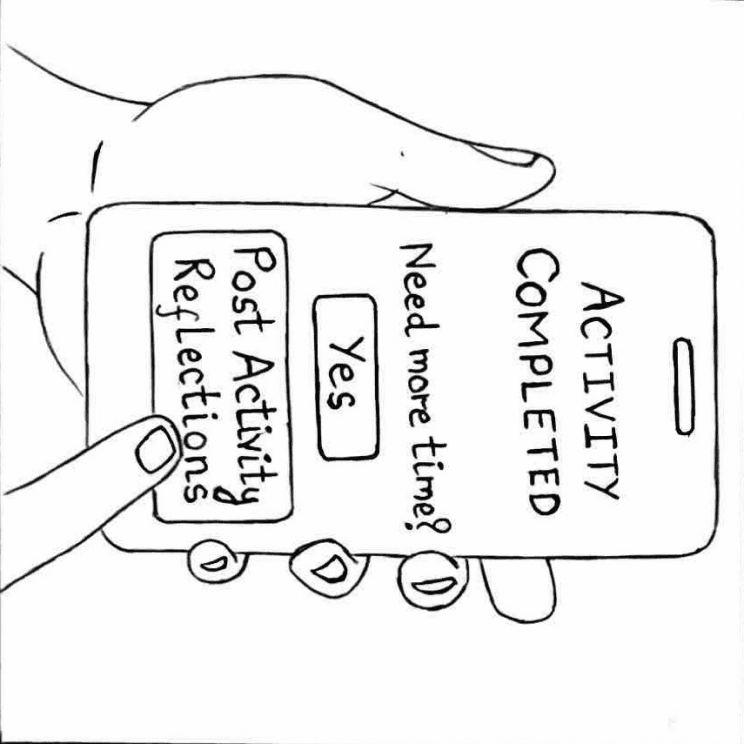
To bring the concept to life, a storyboard was created following Rohan and Coco through a complete socialization session, from the morning notification to the final reward. It helped guide many of the design decisions that followed.

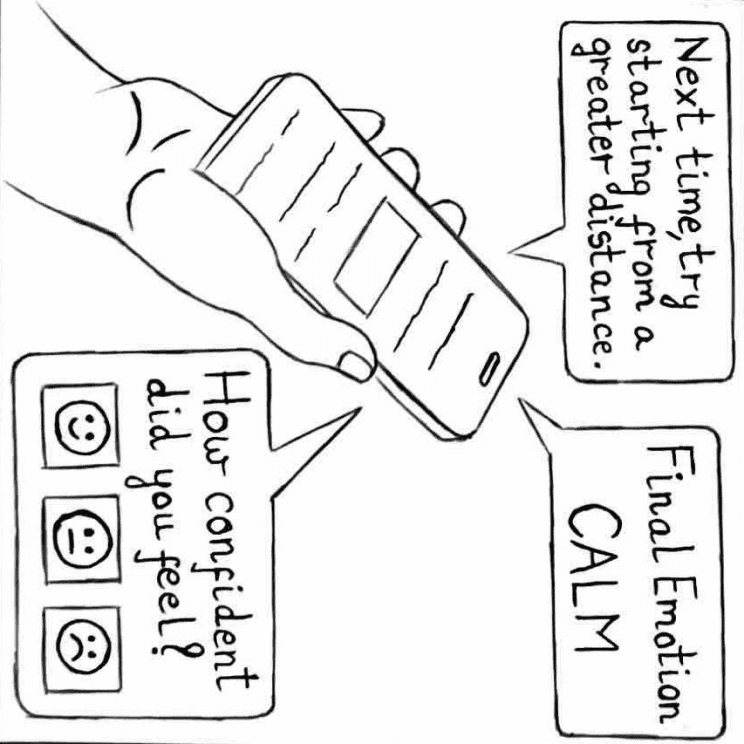
Rohan receives a notification, making it the perfect time for a socialization activity.

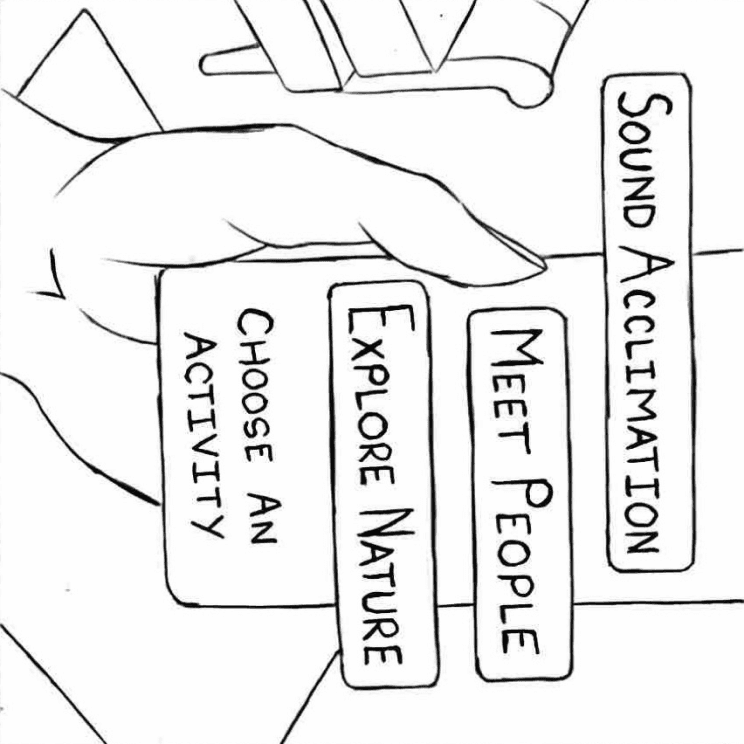
Opens the app and selects a topic to engage Coco in an outdoor activity.

Takes Coco for a morning walk, helping him get comfortable in a natural setting.

Harness detects emotional changes and surfaces an adaptive recommendation.

Offers treats to help Coco relax and gradually continues their walk.

Checks Post-Activity Reflections to review Coco’s progress.

Reviews Coco’s final emotion, receives a recommendation, and reflects on his confidence.

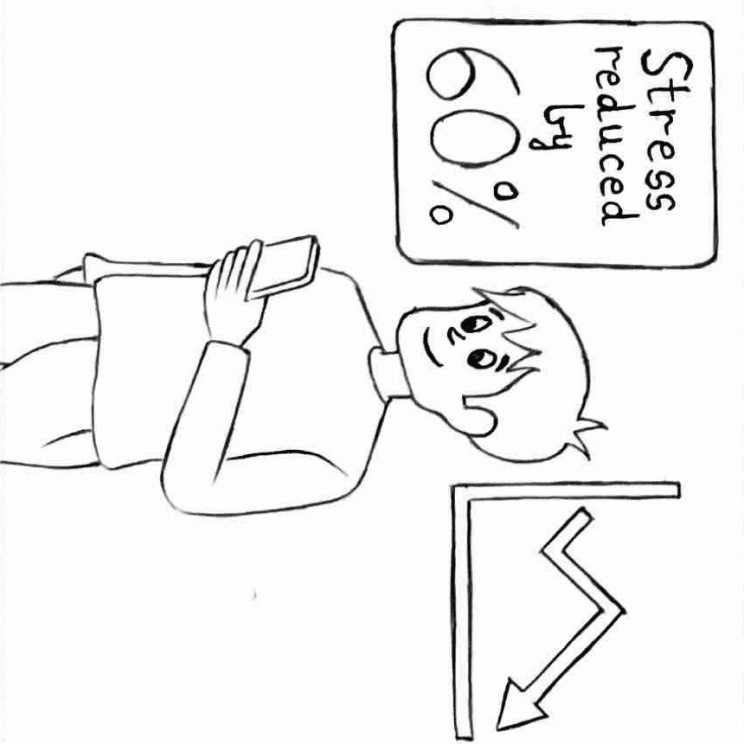
Reviews Coco’s long-term emotional trends and improvement.

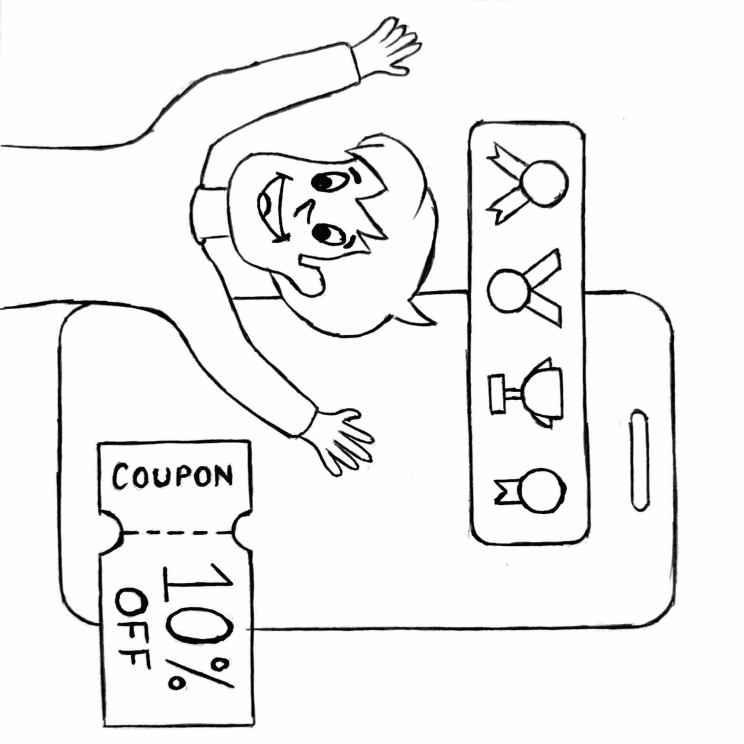
Completing activities earns Rohan milestone badges and unlocks redeemable rewards.

Prioritization

Feature prioritization was guided using the Kano Model and MoSCoW framework to identify which features would create the most user value while keeping the MVP focused.

Kano Model

To ensure the experience aligned with puppy owners’ needs, the Kano Model was used to evaluate and prioritize potential features. This helped identify essential, performance-driven, and delight-focused features, allowing the MVP to balance usability, emotional support, and long-term engagement.

Puppy Profile Setup

02

Description

Description

Basic

Performance

Delighter

Add details like name, breed, age, and vaccination history for a personalized experience.

Socialization Activities

06

Description

Description

Basic

Performance

Delighter

A deck of curated tasks categorized into groups like noise desensitization, meeting people, navigating urban environments, or exploring nature

Adaptive Recommendations

16

Description

Description

Basic

Performance

Delighter

Suggest alternate actions based on real-time feedback (e.g., “Move to a quieter area”).

Stress Triggers Tracker

30

Description

Description

Basic

Performance

Delighter

App compiles a log of common stressors observed in the puppy’s behavior over time, based on activities performed.

Smart Scheduling

24

Description

Description

Basic

Performance

Delighter

Plan activities at optimal times based on your puppy’s energy levels and behavior patterns.

Pre-Activity Preparation Tips

25

Description

Description

Basic

Performance

Delighter

Get tips to ensure success before starting an activity.

MoSCoW

The MoSCoW framework was used to further prioritize features based on product goals, technical feasibility, and MVP scope. This helped define which features were critical for the first release and which could be introduced in later iterations without affecting the core experience.

Must Have

User Login

Onboarding Q/A

Puppy Profile

Socialization Activities

Real-time HRV Tracking

Activity Recommendations

Stress Trigger Alerts

Redeemable Rewards

Milestone Badges

Help and Support

Should Have

Multiple Pet Profiles

Real-time Monitoring

Emotional State Trends

Post-activity Reflections

Adaptive Recommendations

Pre-activity Tips

Feedback

Could Have

Social Sharing

Leaderboard

Resource Library

Playdate Scheduling

Peer Support

Won’t Have

Group Events

In-app Chat Support

Customizable Themes

Smart Scheduling

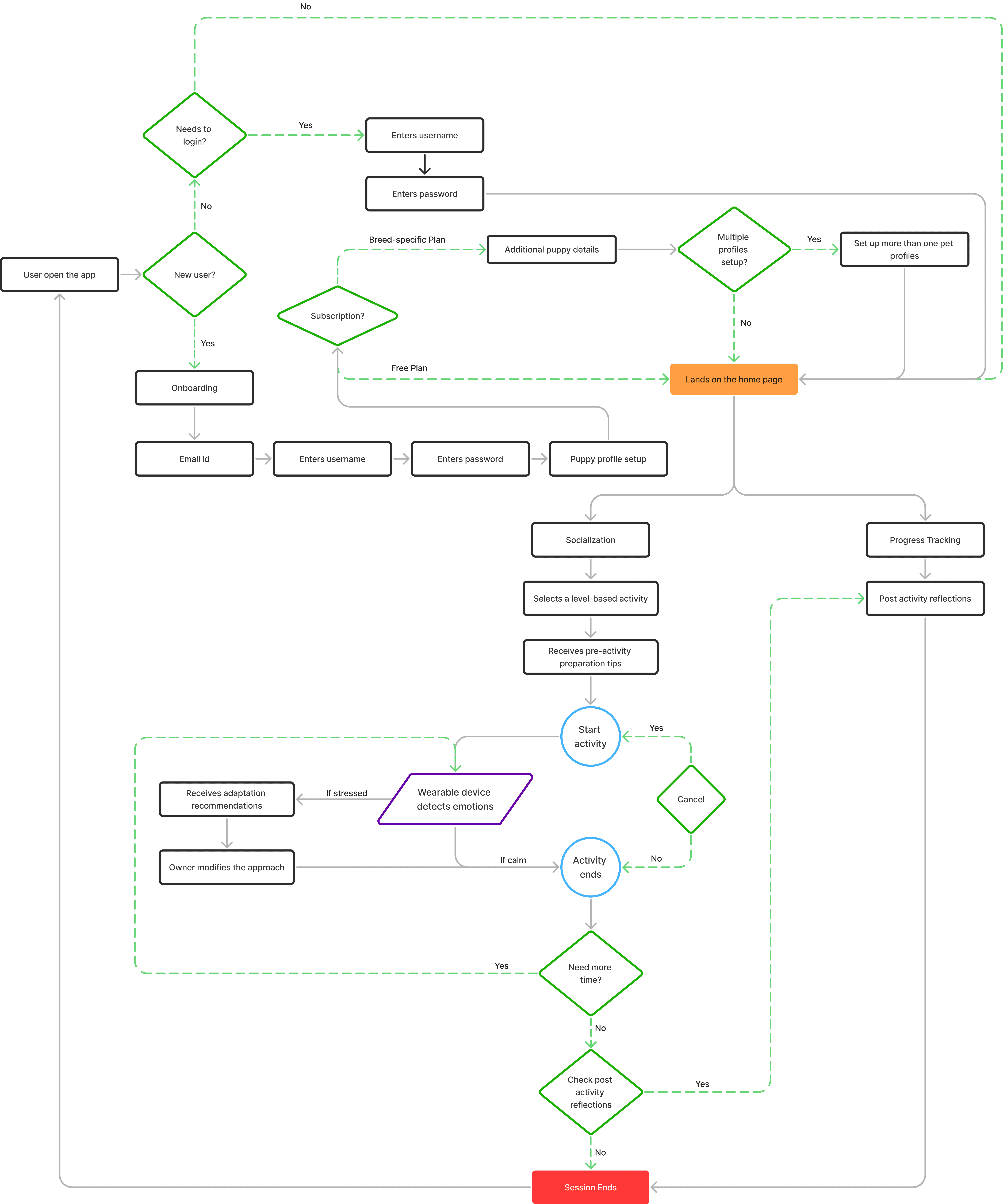
Userflow

The userflow mapped how a first-time puppy owner would move from onboarding through activity completion and reflection, highlighting key decision points, user actions, and feedback moments across the experience.

Design Walkthrough

Onboarding

The onboarding flow introduces the importance of early socialization, frames the behavioral risks of missed exposure, and guides users on how to integrate the smart harness.

Pet Profile

The pet profile setup screens allow users to enter essential details about their puppy, such as name, age, breed, gender, and existing behavioral issues. This information helps the business understand puppy demographics and identify behavioral trends that concern owners the most.

Socialization Journey

Users can browse guided socialization activities through topic-based cards, each designed to gradually expose puppies to new environments, sounds, and interactions. After completing an activity, Post-Activity Reflections capture the puppy’s last detected emotional state, owner confidence, and reaction to the experience.

Over time, the analytics dashboard visualizes emotional trends and confidence patterns, helping owners track progress and share insights with veterinarians or trainers during consultations.

Rewards

The rewards system encourages consistent socialization through milestone badges earned by completing activity topics, with redeemable rewards and partner discounts unlocking as progress increases. Locked rewards display the number of badges required to unlock them, reinforcing motivation and long-term engagement throughout the socialization journey.

Usability

85.7% success.

The other 14.3% was the lesson.

Moderated, think-aloud usability testing focused on identifying where the design held up and exactly where users stumbled. Every iteration that followed was grounded in direct user feedback.

Participants

5

First-time and recent puppy owners

Tasks Tested

7

Core interaction flow

Method

Think-aloud

Capturing reasoning live

Task Success Matrix

To bring the concept to life, a storyboard was created following Rohan and Coco through a complete socialization session, from the morning notification to the final reward. It helped guide many of the design decisions that followed.

Participants

Task 1

Task 2

Task 3

Task 4

Task 5

Task 6

Task 7

Avg. Score

P1

P2

P3

P4

P5

Final Score

S

S

S

S

S

S

S

S

S

S

S

S

S

S

S

S

S

S

S

S

S

S

S

S

S

S

S

P

P

P

P

P

S

S

S

S

85

71

85

100

100

100

100

100

20

100

80

85.7

85

What the matrix showed

6 of 7 tasks scored at or near 100%. Task 5, running an activity in real time, dropped to 20%, isolating the screen that needed the most rework.

Iterations

Iteration 1 · Discoverability issues affected 4/5 users

QUOTE

“I couldn't notice that there was a part to scroll down for. If it could scroll down automatically, would help me understand that there is something below it.”

DESIGN CHANGE

Added a visible scroll cue and adjusted text alignment to help users discover additional AI recommendations below the emotion graph.

HOW IT HELPS

The scroll bar guides users to explore beyond the first few messages, helping them avoid missing important recommendations or calls to action.

Hey Rohan, I noticed Coco is feeling stressed.

Pause for a moment. Let Coco settle before moving ahead.

If that doesn’t work, try increasing the distance from the trigger or shifting to a calmer, quieter space.

PupSync AI

Hey Rohan, I noticed Coco is feeling stressed.

Pause for a moment. Let Coco settle before moving ahead.

If that doesn’t work, try increasing the distance from the trigger or shifting to a calmer, quieter space.

PupSync AI

Iteration 2 · Limited trigger inputs created friction for 3/5 users

QUOTE

“You can mention trigger and I can mention what the trigger is, because maybe these aren't the only reactions a pet can have.”

DESIGN CHANGE

Added a free-text trigger field to the post-activity reflection, letting owners describe behavior in their own words.

HOW IT HELPS

Gives users a sense of control by letting them share their unique experiences in their own words.

User-entered responses help identify common triggers helping the progress tracking show more meaningful and easy-to-understand insights.

How did Coco react?

Calm & Engaged

Focused and participated smoothly.

Lunging / Barking

Reacted intensely or excitedly.

Hesitant / Avoiding

Kept distance or showed reluctance.

What triggered Coco today?

Write what triggered Coco’s attention or reaction…

Iteration 3 · Common stressor visibility was missing for 3/5 users

QUOTE

“If I could also see a list of common stressors, like what's bothering my dog the most, I could work more specifically on those areas.”

DESIGN CHANGE

Added a “Common Triggers” graph to the analytics page, surfacing the top 5 stressors logged in post-activity reflections.

HOW IT HELPS

Showing common triggers helps owners understand where their puppy struggles most, allowing them to provide more focused support in specific situations.

Tracking these patterns also helps owners share clearer behavioral insights with veterinarians during consultations.

Coco’s Common Triggers

0

10

20

40

50

30

Cars

Strangers

Dogs

Vacuum

Bikes

Total triggers recorded: 40

Most Frequent: Cars

Market Validation

A working prototype proves the design is usable, but not whether people will buy, trust, or consistently engage with the product. Three pretotyping experiments tested the riskiest assumptions in the business model before development.

OPERATING PRINCIPLE

“How do I learn what's true about my product without building the product?”

METHOD

Assumptions were mapped based on certainty × impact, then tested the high-impact / low-certainty ones with lightweight experiments designed to generate real-world signals.

Pretotyping Experiments

Experiment 1 · Fake Front Door

Demand Validation

Test

Will owners pay for the wearable and use the PupSync app to access real-time socialization?

METHOD

Launched a lightweight landing page to validate demand for PupSync.

TARGET

≥ 10% conversion in 7 days

SAMPLE

33 unique visitors

CONVERSION RATE

12.1%

TARGET

4 sign-ups

VALIDATED

Experiment 2 · Mechanical Turk

Testing Real-time AI Guidance Adoption

Test

Will puppy owners act on AI-generated emotional guidance during real-world walks?

METHOD

Manually simulated the app experience during dog walks using verbal real-time recommendations.

TARGET

≥ 3 of 5 participants adjust behavior

SAMPLE

5 participants - In-person, guided dog-walking sessions

Behavior adjustment RATE

4/5

TARGET

80% acted on tips

VALIDATED

Experiment 3 · Facade

Early Retention Validation

Test

Will owners return to the PupSync app daily during the critical socialization period?

METHOD

Users logged daily activities in a Framer prototype, with each interaction tracked in Excel.

TARGET

≥ 3 of 5 participants return 5 consecutive days

SAMPLE

5 participants

Daily-engagement rate

2/5

TARGET

40% returned

INVALIDATED

INSIGHTS

The Facade experiment revealed that a strong concept alone was not enough to sustain daily engagement. Early retention depended on external motivators such as reminders, rewards, and progress cues that could reinforce consistent behavior during the critical socialization period.

Most participants followed the AI recommendations during the walk, indicating that the guidance was clear and actionable in real time. However, managing both a leash and a phone created interaction friction, highlighting the need for hands-free experiences such as smartwatch integration.

Product Strategy

Success Metrics

The metrics framework focused on measuring more than growth alone. KPIs tracked whether PupSync could achieve sustainable adoption, while KEIs evaluated whether the experience was creating meaningful behavioral change and long-term engagement for puppy owners.

KPI

10%

User Acquisition Rate

Monthly user growth indicating early product-market traction.

WINDOW - 6 MONTHS POST-LAUNCH

KPI

30%

Milestone Completion

Users completing 3 socialization milestones within their first month.

Window — Month 1 per cohort

KEI

40%

Owner’s Confidence Lift

Owners reporting higher confidence during socialization activities.

Window — Month 1 per cohort

Reflections

  • The hardest part of this project was realizing the real obstacle was emotional, not informational. Instead of overwhelming owners with content, PupSync focused on supporting confident decision-making in real-time socialization moments.

  • Real-time guidance created real-world friction. Managing a leash, a puppy, and a phone made in-the-moment interactions awkward, revealing an opportunity for more seamless, hands-free guidance through smartwatch integration or audio-based interactions.